

Anyone who has spent a summer in Hong Kong knows that dressing for hot and humid weather is not simply a matter of choosing shorter sleeves.
You may leave home in warm outdoor conditions, step into a heavily air-conditioned MTR carriage, spend hours in a cool office, head outside again for lunch, and then go straight to dinner. The same outfit needs to work across very different environments.
Humidity adds another challenge. When the air contains a high level of moisture, perspiration does not evaporate as efficiently, which can make warm temperatures feel even more uncomfortable.
While clothing cannot change the weather, choosing the right fabric, fit, weight and silhouette can make everyday dressing much easier.
For women looking for a simple warm-weather wardrobe, a lightweight dress can be particularly practical. It eliminates unnecessary layers while giving you enough flexibility to move from casual daytime activities to work, travel or an evening out.
So, what should you actually look for?
Start With the Fabric, But Look Beyond the Label
When shopping for summer clothing, it is easy to focus entirely on the fibre listed on the label.
Fabric choice certainly matters, but it is only part of the story.
The weight of the material, how it is knitted or woven, the construction of the garment and how closely it sits against your body can all influence how it feels during a humid day.
Research into bamboo-based textiles has examined properties including breathability, moisture movement and thermal comfort. Findings suggest bamboo-containing fabrics can offer useful moisture- and heat-management characteristics, although performance varies considerably according to the way the fibre is processed and the finished fabric is constructed.
That means the most useful question is not simply, “Is this bamboo?”
Instead, ask:
Is it lightweight? Does it feel comfortable against my skin? Can I move easily? Does the construction make sense for the climate in which I will actually wear it?
Bamboa's bamboo dresses are made from lightweight bamboo jersey and include T-shirt, tank and long-dress silhouettes. The collection has been developed around softness, cooling comfort and everyday wearability.
Why Fit Matters in Humid Weather
Imagine two dresses made from similar material.
One fits closely around the torso, waist and legs. The other follows the body while leaving more freedom to walk, sit and move.
Even with similar fabric, they may feel completely different after several hours outside.
That is why choosing clothing for humid weather should involve fabric and fit together.
You do not necessarily need oversized clothing. The aim is simply to avoid unnecessary restriction and choose a silhouette that works with your movement rather than against it.
A longer dress can be particularly useful because it provides coverage without requiring several separate layers. A T-shirt dress may suit relaxed daytime wear, while a flowing maxi dress can move easily between casual and more polished settings.
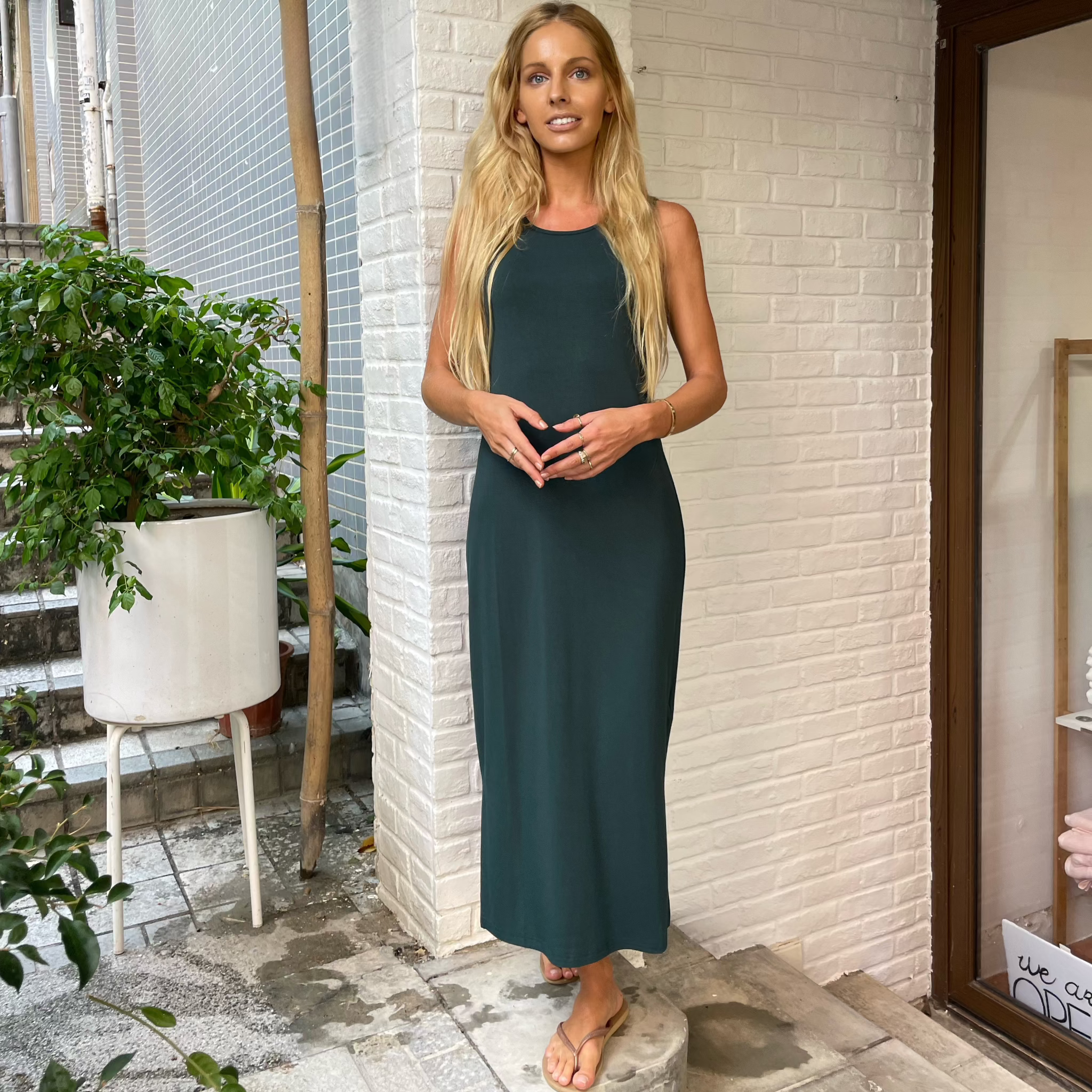
Bamboa's Kailua Bamboo Jersey Tank Dress, for example, is a long dress designed with side slits to make walking easier. It uses 95% bamboo jersey fibre and is intended for different settings, from relaxing at home or visiting the beach to shopping or going out in the evening.
That is a useful way to judge warm-weather clothing:
Don't only ask whether it looks good. Ask whether you can comfortably live your day in it.
From a Hong Kong Gallery Visit to an Evening Out
Real-world experience can sometimes tell us more about versatility than a product description.
The Kailua dress provides a useful example.
Customers have described using the same dress in very different situations. One reviewer mentions styling it with shoes and accessories as well as wearing it casually with flip-flops. Another describes wearing it for an afternoon visit to a gallery in Kwai Chung and highlights its light, adaptable nature. Other reviewers specifically mention freedom of movement and comfort during hot weather.
These are individual customer experiences rather than scientific tests, but they demonstrate an important principle when choosing clothes for a humid city:
Versatility matters.
If one dress can comfortably take you from an afternoon outing to dinner, or from casual sandals to a more polished look with jewellery, you are getting much more from that garment than something designed for only one occasion.
The Hong Kong Two-Climate Problem
One of the most practical challenges of dressing in Hong Kong is the contrast between outdoor humidity and indoor air conditioning.
You might walk outdoors in warm conditions, enter an air-conditioned train, spend hours inside an office or shopping centre, and then return to the heat.
Trying to solve both climates with one heavy outfit rarely works well.
A more practical approach is:
Lightweight base + removable layer.
Start with clothing suited to the warmer environment. When you move indoors, add a lightweight cardigan, scarf or other layer. When you return outside, remove it.
A comfortable dress works particularly well as that base because you are not already wearing multiple pieces.
If you prefer building outfits rather than relying entirely on dresses, Bamboa's women's bamboo apparel includes T-shirts, tank tops, camisoles, lounge pieces, dresses and other options that can be combined into a flexible warm-weather wardrobe.
Why Maxi Dresses Work So Well for Warm Weather
The enduring popularity of the maxi dress makes sense when you consider practicality.
One garment creates almost the entire outfit.
There is no need to coordinate a separate top and bottom, and the right silhouette provides coverage without requiring additional layers.
A maxi dress can also change character depending on how it is styled.
Pair it with flat sandals and a casual bag for daytime. Add jewellery, a belt or different shoes for dinner. When travelling, that versatility becomes even more useful because one garment can potentially replace several occasion-specific outfits.
This is also how Bamboa approaches its dress collection. Its longer bamboo jersey styles are designed to move between casual and more polished situations rather than being limited to one occasion. Bamboa
For anyone trying to create a smaller and more useful wardrobe, this leads to a better question than “How many dresses do I own?”
Ask:
“How many situations can I realistically wear this dress in?”
A Dress Designed Around Real Movement
Small design details can make a significant difference during everyday wear.
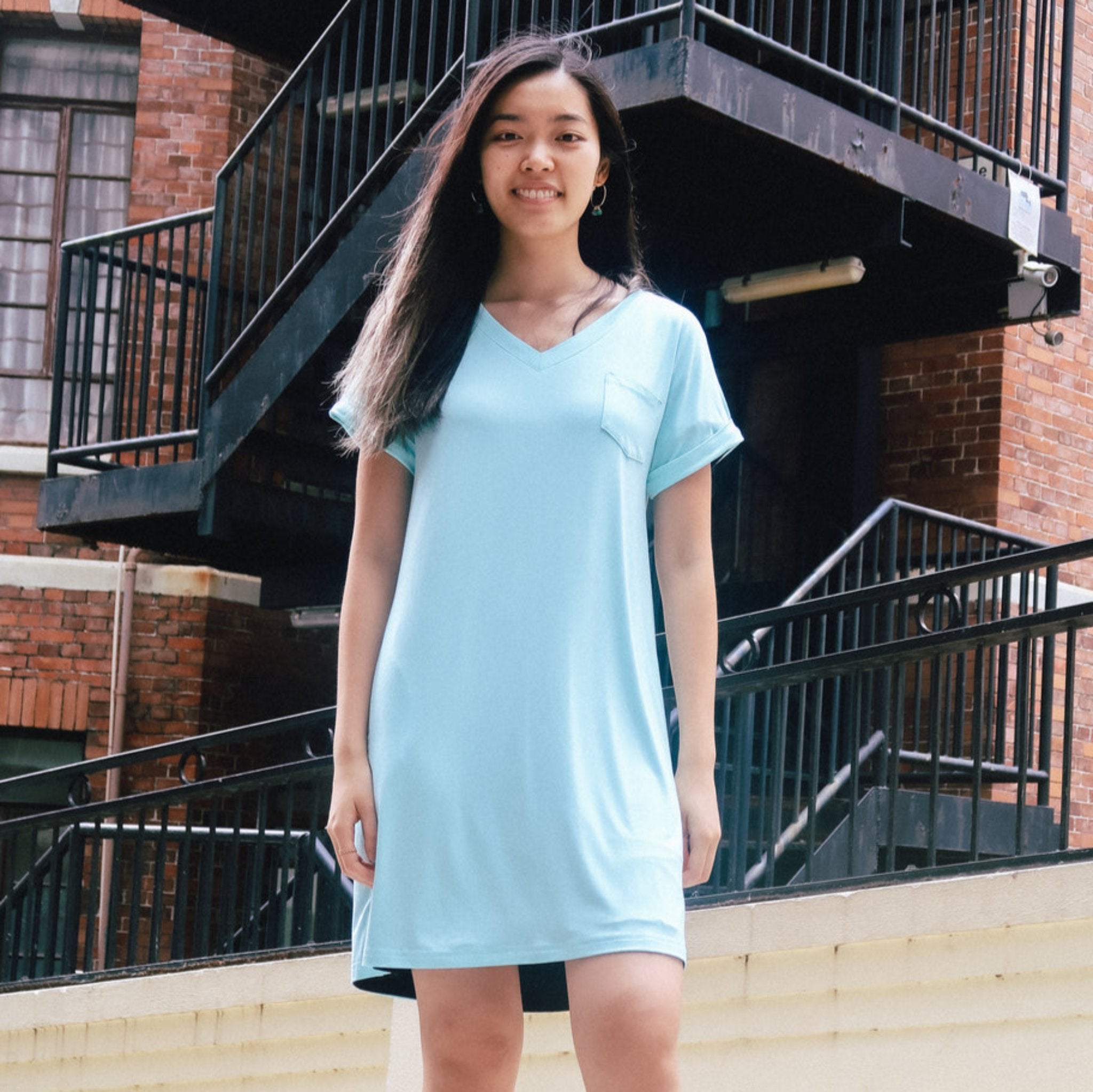
Consider Bamboa's Lanikai Bamboo Jersey T-Shirt Dress.
The knee-length dress combines 95% bamboo jersey fibre with 5% spandex for stretch. It also includes a small front pocket and a larger side pocket designed to hold everyday essentials such as a phone, wallet or keys.
Those details solve actual problems.
When you are walking to a café, travelling, visiting the beach or quickly heading to the shops, having somewhere practical for your phone and keys can matter more than an elaborate decorative feature.
The same applies to stretch and freedom of movement.
A dress may look perfect while standing still in front of a mirror. The better test is whether it remains comfortable while walking quickly, sitting for lunch, climbing stairs, carrying a bag or spending several hours away from home.
Think About the Clothes You Actually Wear
Many wardrobes contain pieces that looked wonderful when purchased but rarely leave the hanger.
One way to avoid this is to shop according to use cases rather than occasions.
For example, instead of buying a dress specifically for one dinner, consider whether it could also work for lunch, travel or a weekend outing.
For everyday errands, a relaxed T-shirt dress may be enough.
For holidays and casual afternoons, a tank dress can offer an uncomplicated option.
For work or evening plans, a long dress for women can provide greater coverage while still allowing you to change the overall look through accessories.
For travel, the strongest option may be the dress capable of handling several of those situations.
This approach does not mean every garment needs to work everywhere. It simply means considering how frequently you will genuinely wear something before adding it to your wardrobe.
What About a White Maxi Dress?
A white maxi dress has become something of a warm-weather classic.
It creates a fresh, simple look and pairs easily with sandals, natural accessories and neutral colours.
But colour should not be the first factor you consider when choosing clothing for humid weather.
A white maxi dress made from a heavy material or requiring several layers underneath may be less comfortable than a darker dress made from a lightweight fabric.
Consider the garment as a whole.
Is the fabric lightweight?
Does it need a lining?
Is it transparent in bright daylight?
Can you move comfortably?
How easy is it to wash?
Can you wear it in several settings?
Answer those questions first. Choose the colour afterwards.
What Makes Bamboo Jersey Interesting for Warm-Weather Clothing?
Bamboo-derived textiles have received increasing attention in textile research because of characteristics associated with softness, moisture movement and thermal comfort. However, those characteristics should not be treated as proof that every bamboo garment will automatically outperform every cotton or synthetic alternative.
The finished textile matters.
Bamboa's own bamboo jersey clothing focuses on that finished experience. Its dress collection uses lightweight jersey, while individual products such as the Kailua and Lanikai dresses are designed around movement, softness and versatility.
There is also a broader story behind the material.
Bamboa states that it sources bamboo material from FSC-certified forests, while its finished fabrics and components are covered by certifications including OEKO-TEX. The company also outlines its wider environmental and social standards through its Bamboa certifications page.
For someone trying to make a more considered purchase, understanding where a material comes from and how a brand approaches production can be just as relevant as the way the garment looks.
Building a Practical Warm-Weather Capsule Wardrobe
A useful summer wardrobe does not need to contain dozens of similar pieces.
Instead, think about the situations that make up your normal week.
You might need something for:
- everyday errands and casual lunches;
- work and heavily air-conditioned indoor spaces;
- relaxed weekends;
- travel;
- dinner and social occasions.
Now look at your wardrobe and identify which garments can cover more than one of those situations.
A comfortable T-shirt dress might handle errands, lunch and travel.
A versatile maxi dress might cover an afternoon outing, dinner and holidays.
A tank dress could work for a casual weekend and become more polished with different accessories.
The aim is not necessarily to own less for the sake of owning less. It is to build a wardrobe in which more of what you own actually gets worn.
Bamboa's Bamboo Dress collection currently includes different lengths and silhouettes, from the Lanikai T-shirt dress to the Kapuhi long T-shirt dress, Kailua tank dress and LULU long black dress.
Don't Forget About Care
Warm-weather favourites are likely to be washed frequently, which makes garment care part of the buying decision.
Before purchasing something you expect to wear regularly, ask whether its care requirements fit your lifestyle.
Bamboa recommends washing its bamboo fabrics at a maximum of 40°C with mild detergent, avoiding bleach and unnecessary fabric softener, and using low-temperature drying or hang drying as appropriate. More guidance is available in Bamboa's bamboo fabric care information.
Individual garments may have their own instructions, so always check the product care label as well.
Taking proper care of frequently worn pieces can help them remain useful parts of your wardrobe for longer.
Five Questions to Ask Before Buying Your Next Summer Dress
Before choosing between maxi dresses for women, long dresses or shorter everyday styles, give yourself a quick five-question test.
1. How does the fabric actually feel?
A fabric may sound impressive on a product page, but comfort against your skin matters when you are wearing it for hours.
2. Can I move naturally?
Think about walking, sitting, travelling and climbing stairs—not simply standing in front of a mirror.
3. Where will I genuinely wear it?
If you can immediately think of several realistic situations, the dress is more likely to become a useful part of your wardrobe.
4. Can I adapt it for indoor and outdoor environments?
This is particularly important in Hong Kong and other cities where air conditioning can make indoor temperatures feel dramatically different.
5. Will I realistically look after it correctly?
If the care routine does not suit your lifestyle, even the perfect-looking dress may spend more time in the wardrobe than on you.
Choose for Your Climate—and Your Life
There is no single perfect fabric or dress for every hot and humid day.
Comfort comes from the combination of material, fabric construction, garment weight, fit and design.
Your lifestyle matters too.
Someone who spends most of the day outdoors may have different needs from someone moving repeatedly between humid streets and air-conditioned offices. A frequent traveller may prioritise versatility, while someone building an everyday wardrobe may care most about movement and easy care.
The best choice is therefore not necessarily the trendiest dress or the garment making the biggest claims.
It is the one that works naturally with the way you actually live.
Bamboa's lightweight bamboo jersey collection was designed with that kind of versatility in mind—from casual T-shirt silhouettes to longer styles that can transition between different parts of the day.
Explore the Bamboa Bamboo Dress Collection and find a style designed for comfortable, everyday movement.
Frequently Asked Questions
What should I wear in hot and humid weather?
Choose lightweight clothing with a comfortable fit and avoid unnecessary layers when outdoors. Consider the entire garment—including fabric, weight, construction and fit—rather than relying only on the fibre name.
Are maxi dresses good for hot weather?
Yes, a lightweight maxi dress can work well in warm weather because it provides coverage while creating an outfit with a single garment. A comfortable silhouette that allows easy movement is particularly important.
Is bamboo clothing suitable for humid climates?
Bamboo-containing textiles have been studied for properties related to moisture and thermal comfort, but performance depends on fibre processing and fabric construction. Bamboa's own bamboo jersey dresses are specifically designed as lightweight, soft clothing for warm and humid conditions.
What should I wear in Hong Kong's humid weather?
A lightweight base garment combined with a removable layer can be practical. This allows you to stay comfortable outdoors while adding a layer in heavily air-conditioned trains, offices, restaurants or shopping centres.
How can I make a maxi dress more versatile?
Choose a simple silhouette that works with different footwear and accessories. Sandals or trainers can create a casual daytime outfit, while a belt, jewellery, structured bag or different shoes can make the same dress more suitable for an evening out.
How should I care for a Bamboa bamboo dress?
Follow the instructions on the individual garment first. Bamboa's bamboo-fabric guidance generally recommends washing at no more than 40°C with mild detergent, avoiding bleach and using gentle drying methods.